Web3 Hackathon 2026
2026-04-26
Making a contract signing service that links the deposit to the contract, to ensure payee compliance
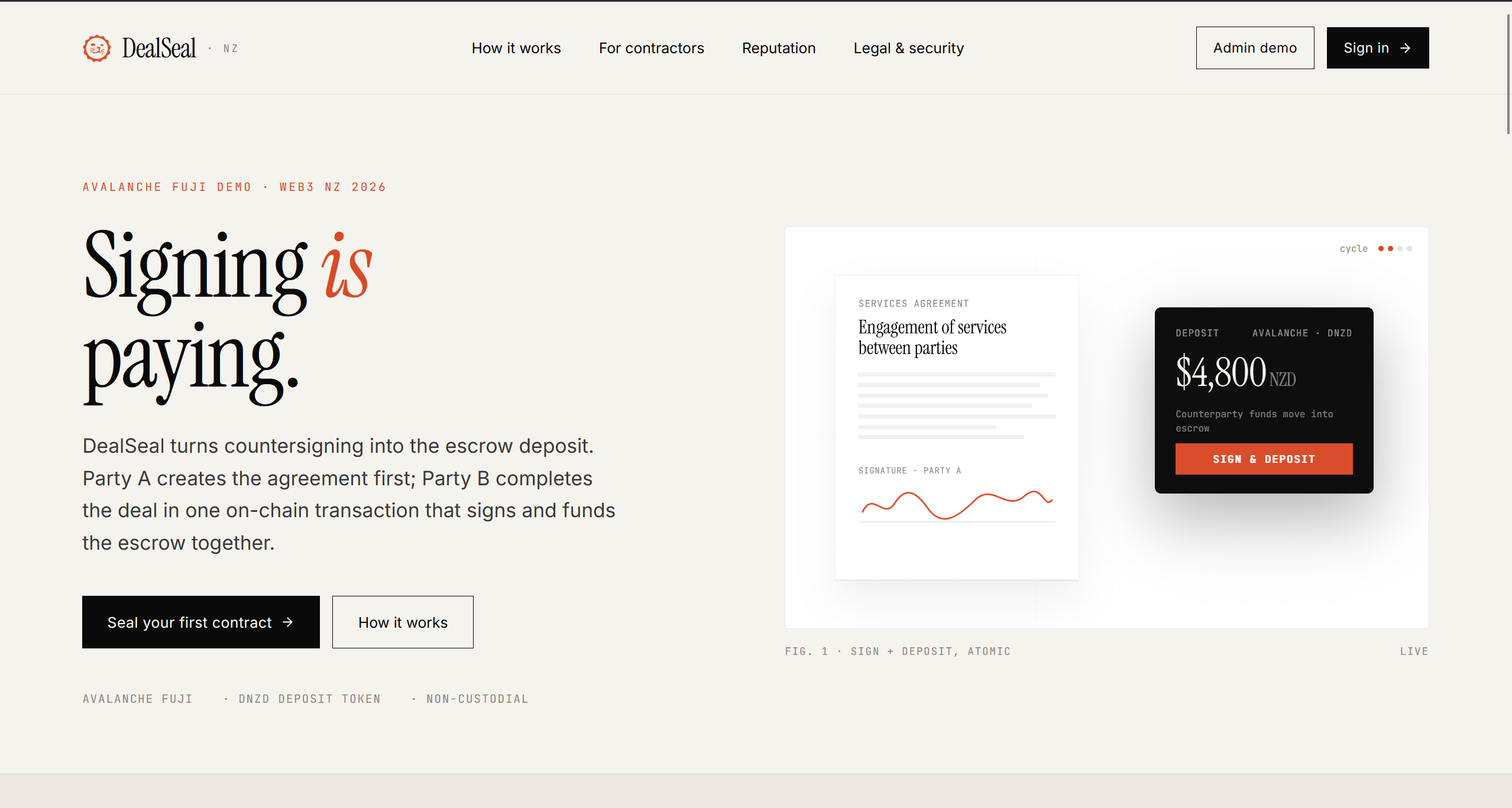
See the 'functional' product at dealseal.nz
During the long weekend, I convinced 4 of my friends to participate in the university of auckland
web3 hackathon, only one of us (not me) had any idea how web3 technologies actually work. after watching
the intro presentation, which went over the theme and prize tracks, we went and started ideating.
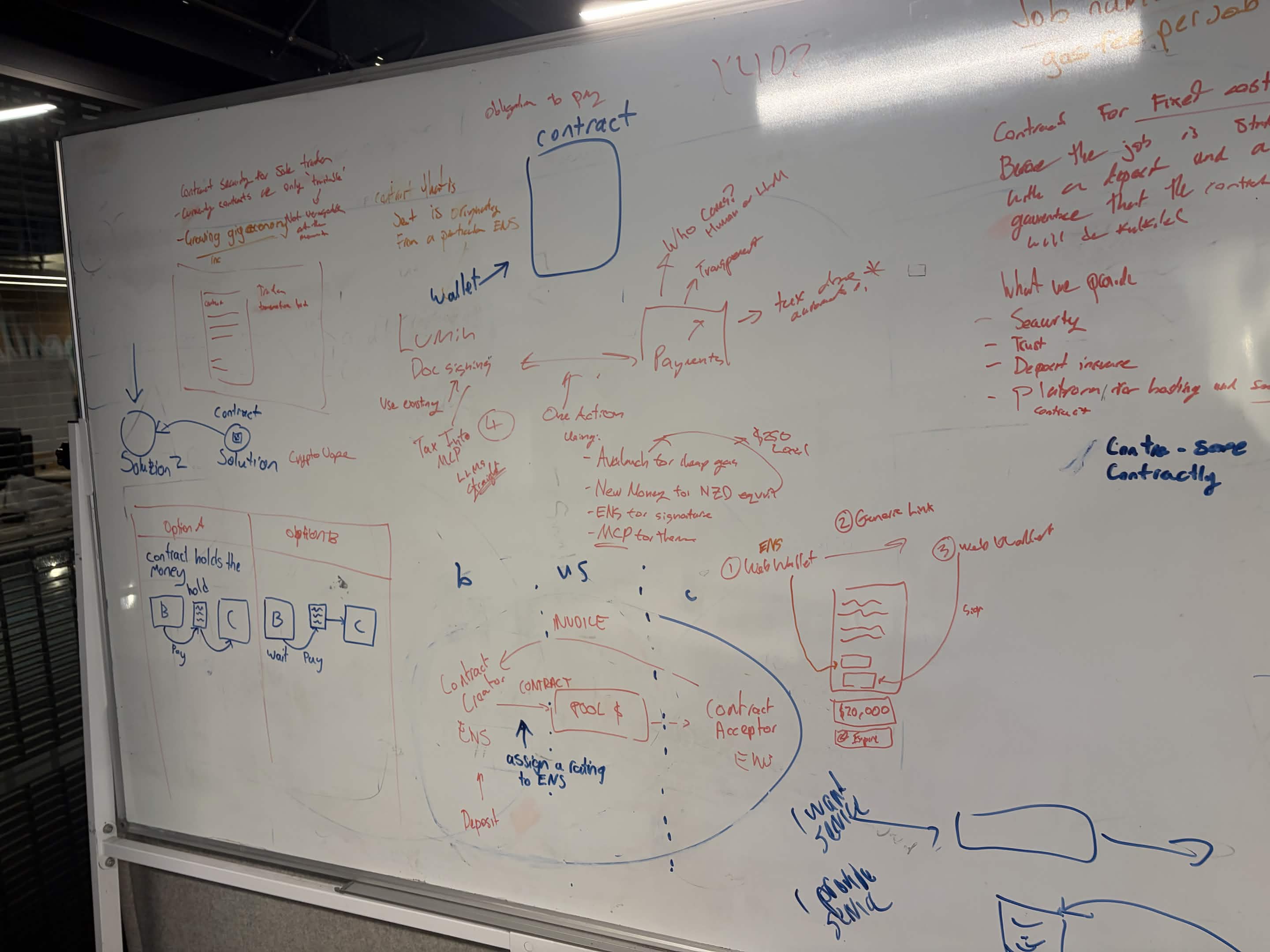
For the first 2 hours we didn't code anything, just stood around the whiteboard, trying to get our
idea fully fleshed out so we didn't waste any time making a product. We saw the Lumin invoicing track
on the intro presentation, and thought we would be able to that; so thats where we focused our work effort
onto. We had the idea to make something similar to current invoicing software. we ended up ideating this into
fixed work contract signing, which would allow us to implement the web3 part of the project much easier.
The problem that we were trying to solve was that a contractor who was working for a larger company
wouldn't be able to get any recourse if the large company decided not to pay after the work had been
completed. (similar to the US Robotics modems scene in the BlackBerry movie)
With our service, a contractor
would be able to sign the contract with their signature and crypto wallet and request a deposit from the
company before the work is started. Then when the work has been completed, the company and contractor
communicate and the company can complete the other payment of the contract. If for whatever reason either
party disagrees, then the money is held in our account and only released when the dispute is solved. This
means that both parties have a reason to be truthful as both have stake in the contract. Additionally, we
have a reputation system that will also assist with selecting a contractor and or company.
This project was largely coded with claude and codex, with all the visual elements (logo etc) made in
Affinity publisher. some of the code, mainly the one time code for email verification was done without the
assistance of AI tools. The competition was focused on making a functional product in a very very short timeframe,
so a project like this wouldn't have been possible without assistance. all ideas for the product were done without
assistance and all done on the whiteboard before any coding was started.
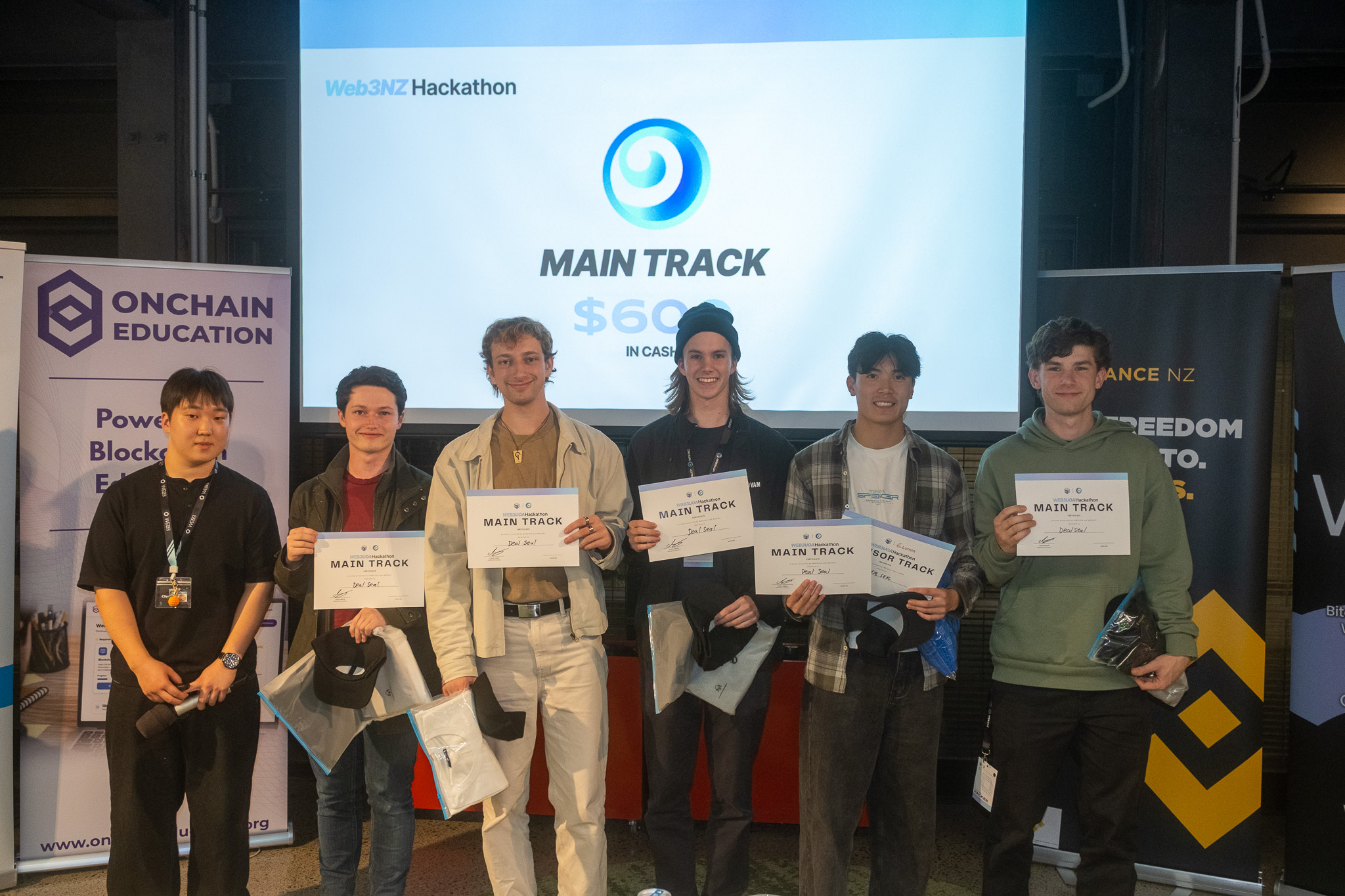
In the end we placed first, winning the main prize track, along with the Lumin prize track and the most git commits
(3 awards total). I really liked doing this hackathon, not for the technology involved but just working with friends
to make a functional product under an extremely short timeframe.